Orpheus and Eurydice: The Impossibility of Looking Away

Thomas L. Miller
Historian & Writer
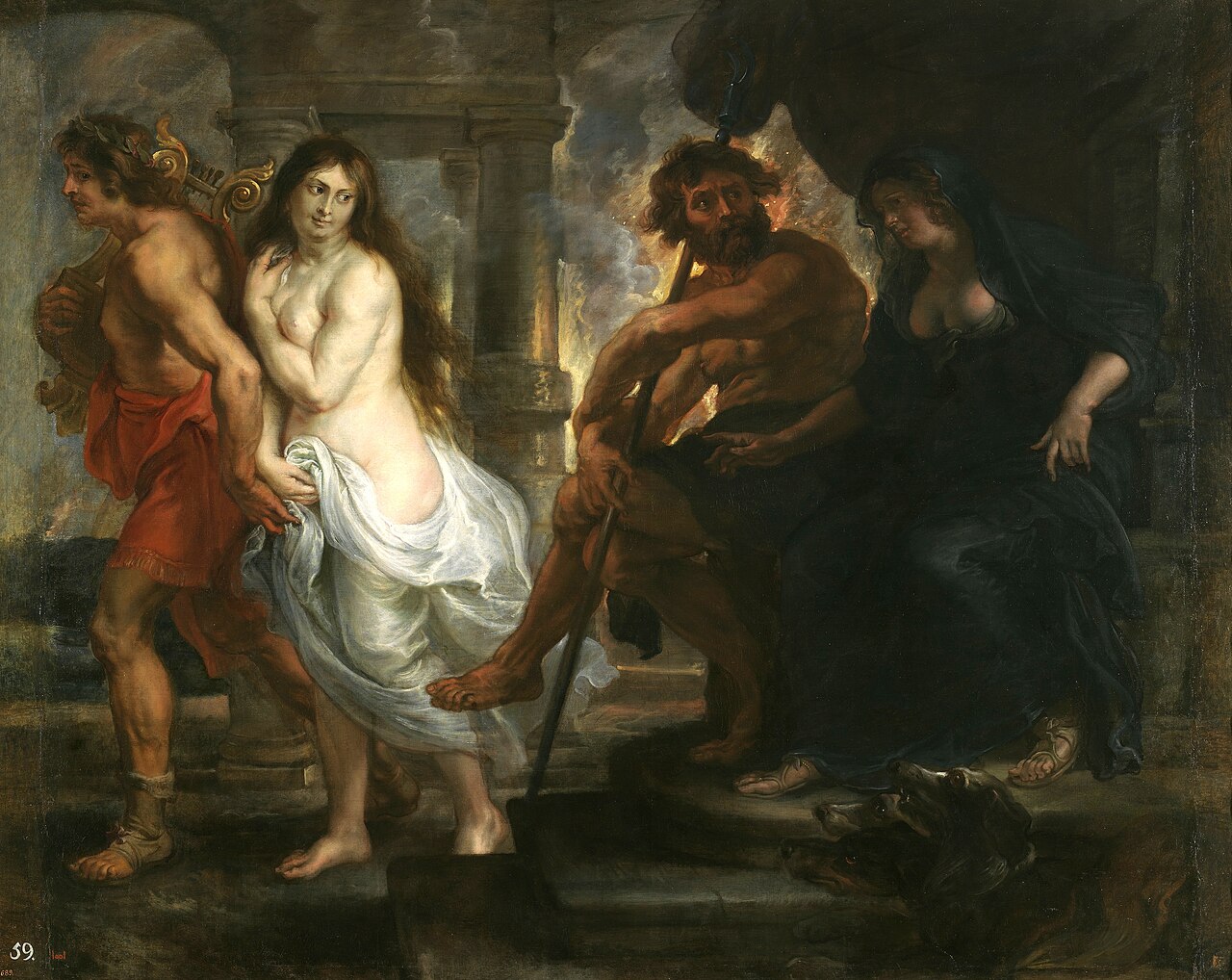
Orpheus was the greatest musician in all of mythology, son of the Muse Calliope and either the god Apollo or the Thracian king Oeagrus. His lyre-playing was so supernaturally beautiful that it could move rocks, charm wild beasts, and cause rivers to stop and listen. He sailed with the Argonauts, where his music proved more effective than brute strength against the Sirens. He was the founder of Orphism, a mystery religion that believed in the transmigration of souls and the possibility of spiritual purification. But his fame rests above all on one journey: his descent into the underworld to retrieve his wife Eurydice.
Eurydice died on their wedding day, killed by a serpent's bite as she fled the advances of the shepherd Aristaeus. Orpheus, inconsolable, did what no living mortal had done before or since: he descended into Hades. His music charmed the guardians of the underworld at every stage: Cerberus fell quiet, the Furies wept, Sisyphus stopped pushing his stone, Tantalus forgot his hunger. Even Hades himself and his queen Persephone were moved. They agreed to release Eurydice, on a single condition: Orpheus must walk ahead of her from the underworld to the surface without once looking back to confirm she was following. If he looked, she would be lost forever.
Orpheus led the way through the long dark passages of the underworld. He could hear no footsteps. The dead are weightless. He could hear no breathing. He had only his faith that Eurydice followed. As he reached the boundary between the underworld and the world of the living, the uncertainty became unbearable. He turned. Eurydice was there, just behind him, just at the boundary, and in the moment his eyes met hers she was pulled back into death. Her final word was his name. He had failed her, and himself, by one moment of doubt.
Orpheus wandered in grief, singing his sorrow to the rocks and rivers. He rejected all other women and (in some versions) founded the practice of loving young men instead. The women of Thrace, frenzied worshippers of Dionysus, tore him apart in their ecstasy, scattering his limbs. His head and lyre floated down the river Hebrus to the sea, still singing, and came ashore on the island of Lesbos, where the Muses gathered his remains and buried them. His lyre was placed among the stars as the constellation Lyra. The myth is ultimately about the paradox of art: music can move even death, but the one thing it cannot do is bring back what is truly gone. To look back, to grasp at what is lost, is to lose it entirely.