The Oracle at Delphi: Where Gods Spoke to Mortals

Thomas L. Miller
Historian & Writer
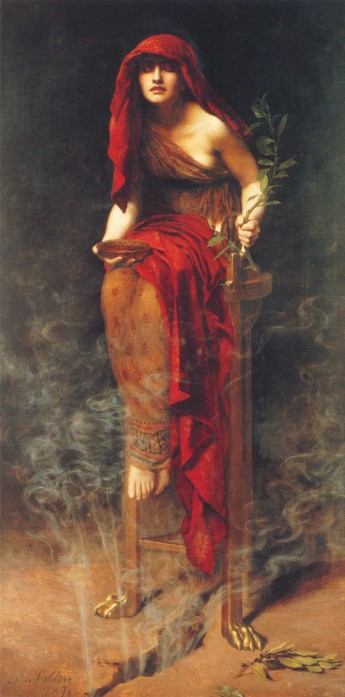
The Oracle at Delphi, known as the Pythia, was the most important religious institution in the ancient Greek world. Located on the slopes of Mount Parnassus above the Gulf of Corinth in central Greece, the sanctuary of Apollo at Delphi was considered the omphalos, the navel of the world and the meeting point of two eagles released by Zeus from opposite ends of the earth. For nearly a millennium, from roughly the eighth century BCE to the fourth century CE, it was the most consulted oracle in the ancient Mediterranean, receiving delegations from Greek city-states, foreign kings, and private individuals seeking divine guidance.
The Pythia was a woman selected from the local community who served as the channel for Apollo's voice. Before consulting her, petitioners underwent purification rituals, sacrificed a goat, and paid a substantial fee. The Pythia herself sat on a tripod over a fissure in the rock, through which sacred vapors rose. Modern geological research has confirmed the presence of ethylene gases in the bedrock at Delphi, which, in sufficient concentrations, produce states of dissociation and altered consciousness, consistent with ancient descriptions of the Pythia's inspired ravings. Priests translated her utterances into hexameter verse and presented them to the petitioner.
The Oracle's pronouncements were famously ambiguous, a feature that was probably deliberate. When Croesus, king of Lydia, asked whether he should attack Persia, the Oracle answered that if he crossed the Halys River, a great empire would be destroyed. He attacked; a great empire was destroyed. His own. When the Athenians asked how to survive the Persian invasion, the Oracle told them to trust in their "wooden walls." Some Athenians interpreted this as the city's wooden palisades; Themistocles persuaded the assembly it meant their fleet. The "wooden walls" won the Battle of Salamis and saved Greece. The ambiguity was not evasion. It reflected the Greek understanding that divine knowledge, filtered through a human medium, necessarily comes in a form that requires interpretation and wisdom to apply.
The sanctuary at Delphi accumulated vast wealth from offerings and became a major political institution in Greek affairs. The Amphictyonic League, a consortium of Greek states, administered it. The oracle's pronouncements could legitimize or undermine political arrangements, endorse or condemn wars, and establish religious law. Modern excavations at Delphi have revealed the remains of the Temple of Apollo (where the Pythia sat), the Sacred Way lined with treasuries built by various city-states, the theater, and the stadium where the Pythian Games were held, the second most prestigious Panhellenic games after the Olympics. The site remains one of the most atmospherically powerful archaeological sites in the world.