Aphrodite and the Judgment of Paris: How Beauty Started a War

Thomas L. Miller
Historian & Writer
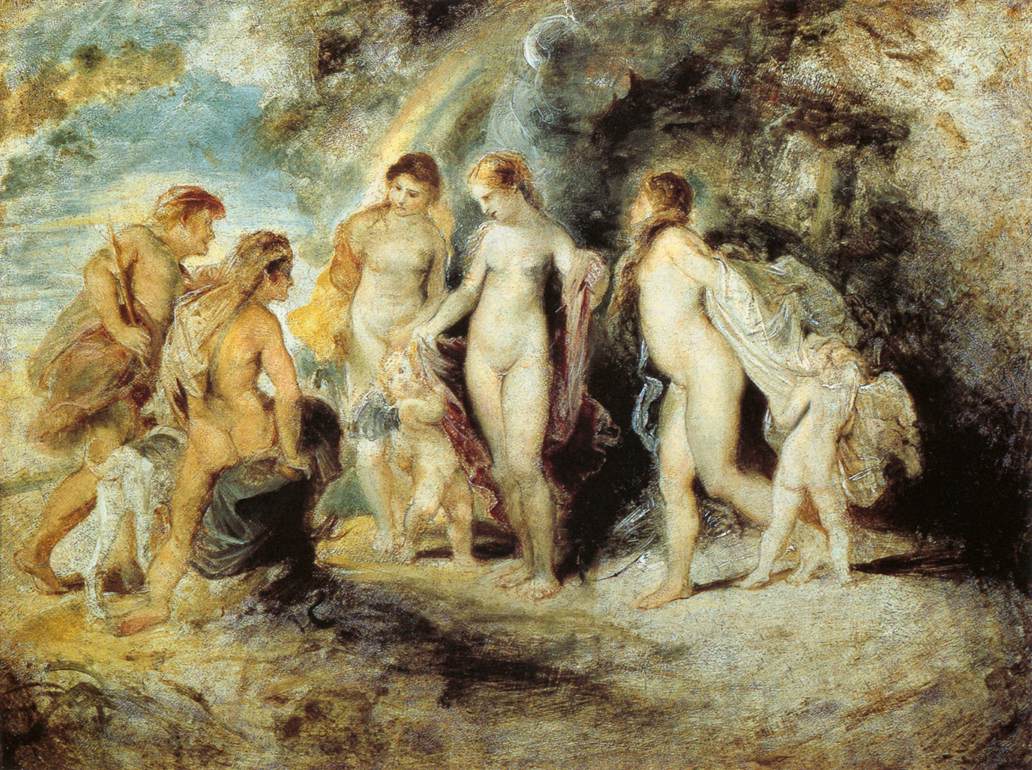
The story begins at a wedding: the marriage of the sea nymph Thetis to the mortal king Peleus, a union that would produce Achilles. All the gods were invited except Eris, goddess of discord. Furious at the slight, she threw among the guests a golden apple inscribed "for the fairest" (kallisti). Immediately three goddesses claimed it: Hera, queen of the gods; Athena, goddess of wisdom and warfare; and Aphrodite, goddess of love and beauty. Zeus, wisely refusing to judge among his wife, his daughter, and his favorite, delegated the decision to a mortal: Paris, prince of Troy, reputedly the most beautiful man alive and therefore the most qualified judge of beauty.
Each goddess offered Paris a bribe. Hera promised him power and dominion, kingship over nations. Athena promised him wisdom, skill in battle, and victory in war. Aphrodite promised him the most beautiful woman in the world as his wife. Paris chose Aphrodite's offer. The consequences were catastrophic: the most beautiful woman in the world was Helen, already married to Menelaus, king of Sparta. Aphrodite arranged for Paris to visit Sparta, where Menelaus received him as a guest with full hospitality. Then Menelaus left for Crete, and Paris sailed away with Helen and with much of Menelaus's treasure. The violation of xenia (the sacred law of hospitality) and the insult to Menelaus's honor made war inevitable.
Aphrodite herself is a figure of enormous complexity in Greek religion. Her origins are likely Near Eastern; she resembles the Phoenician Astarte and the Mesopotamian Ishtar, goddesses of love, beauty, and sexuality who also had martial aspects. In Greek myth she is born from the sea foam gathered around the severed genitals of Uranus, a violent, oceanic origin for the goddess of love. She is married to the lame craftsman Hephaestus but perpetually unfaithful, most famously with Ares (god of war), whose affair with her was exposed when Hephaestus trapped them in an invisible net and invited the other gods to laugh at them. Her power, the irresistible force of desire, is depicted in mythology as potentially more dangerous than even war, since it overrides reason and honor and drives mortals and gods alike to catastrophic choices.
The Judgment of Paris encodes a profound mythological insight about the relationship between beauty, desire, and destruction. Aphrodite wins not because she is most beautiful (the contest was technically about beauty) but because she makes the most appealing promise. Paris chooses love over power and wisdom, and the Trojan War is the consequence. The myth suggests that desire, when unconstrained by reason or honor, is the most destructive force in the universe, and that even beauty has a price written in blood. The apple of Eris has lent her name to the study of conflict ("eris" means strife), and the chaos she set in motion with a single golden object has been a touchstone for human reflection on how small events lead to enormous consequences.