Apollo: Sun God, Musician, and Voice of the Oracle

Thomas L. Miller
Historian & Writer
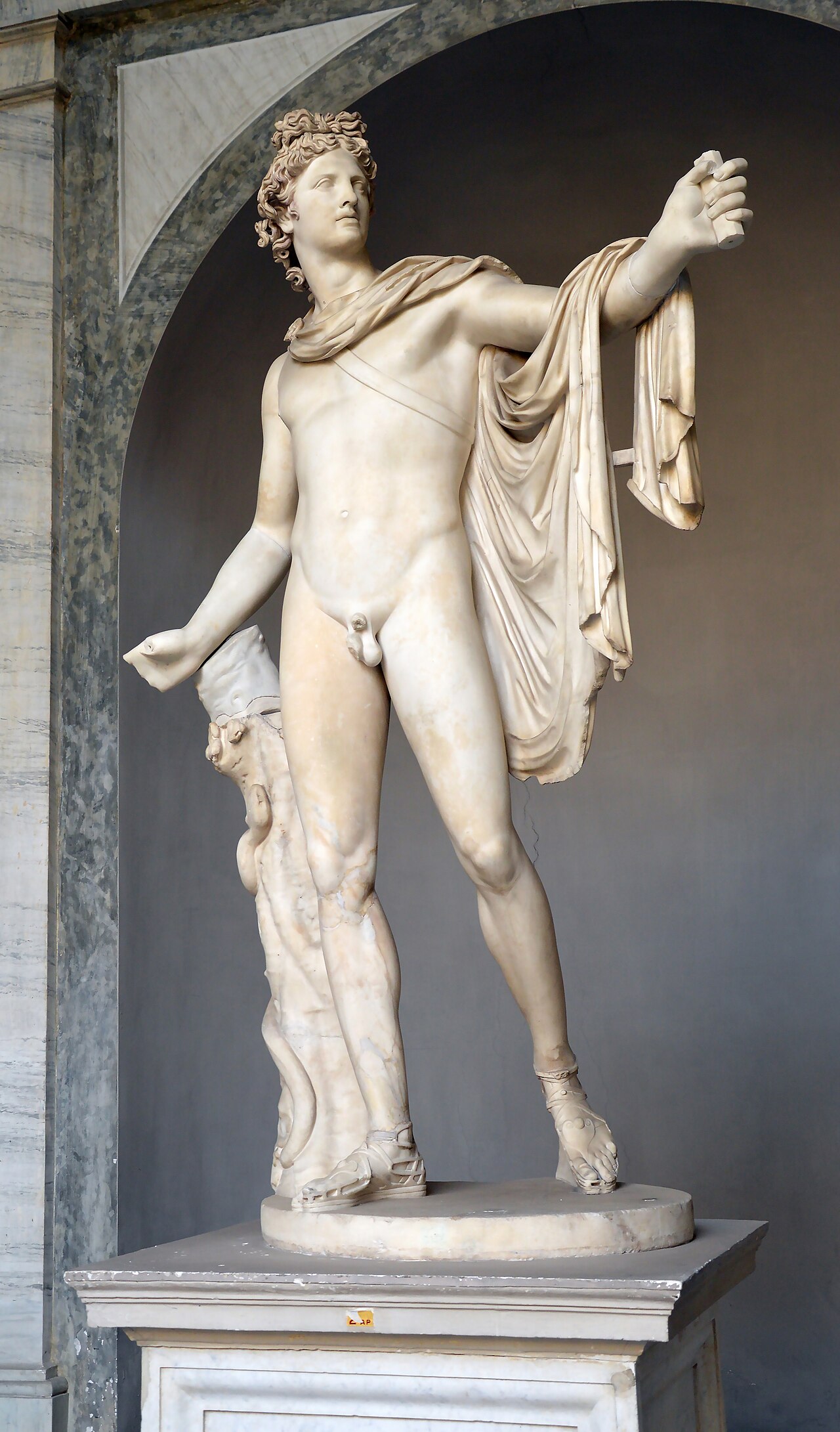
Apollo was the son of Zeus and the Titaness Leto, born on the island of Delos with his twin sister Artemis (goddess of the hunt). His birth was difficult: Hera, furious at yet another of Zeus's infidelities, forbade the land to provide a place for Leto to give birth. Only the floating island of Delos, which was not fixed to the earth, offered refuge. Four days after his birth, Apollo killed the great serpent Python at Delphi, where Python had been terrorizing the region, and established there the most important oracle in the Greek world. He then had to undergo a period of purification for the killing, a detail that reveals how seriously the Greeks took ritual pollution, even when the victim was a monster.
Apollo's domain is extraordinarily broad. He is the god of music (particularly the lyre), poetry, dance, truth, prophecy, the sun, light, healing and medicine (through his son Asclepius), archery, plague, and the protection of young men transitioning to adulthood. This breadth reflects how central his worship was to Greek civilization: the Apolline ideal of the beautiful, harmonious, rational, and ordered stands in deliberate contrast to the Dionysiac ideal of ecstasy, irrationality, and dissolution. Nietzsche's famous distinction between the "Apolline" and the "Dionysiac" as fundamental principles of culture drew directly on this ancient contrast. Apollo represents the principle that reality can be known, understood, and given form.
In mythology, Apollo is also capable of terrible destruction. When the priest Chryses asked Agamemnon to return his daughter and was rebuffed, Apollo sent a plague on the Greek camp that killed thousands, his silver arrows bringing disease like sunbeams bring fire. His romantic pursuits were frequently disastrous: Cassandra, daughter of Priam, rejected him after he had given her the gift of prophecy, and he cursed her so that no one would believe her accurate predictions. Hyacinthus, his beloved youth, died when the jealous Zephyrus (west wind) deflected Apollo's discus to strike him fatally. Daphne, pursued by Apollo, was transformed into a laurel tree by her father as she prayed for escape, and the laurel thereafter became Apollo's sacred plant.
The Apollo Belvedere, a Roman marble copy of a lost Greek bronze, became one of the most influential sculptures of the Renaissance and Enlightenment, defining Western standards of male beauty for centuries. Johann Winckelmann's rapturous description of it in the eighteenth century helped found the discipline of art history. Apollo's identification with the sun became so complete in the Greco-Roman period that he was sometimes merged with the sun god Helios into a single deity. His association with reason, art, and civilization made him a particularly important figure in Enlightenment culture, which saw itself as recovering a classical ideal of rational order. In modern culture he appears in countless contexts, from NASA's Apollo lunar program (chosen to evoke the god who drove the sun) to every laurel wreath awarded at academic and civic ceremonies.