The Twelve Labors of Heracles: Myth as Moral Allegory

Thomas L. Miller
Historian & Writer
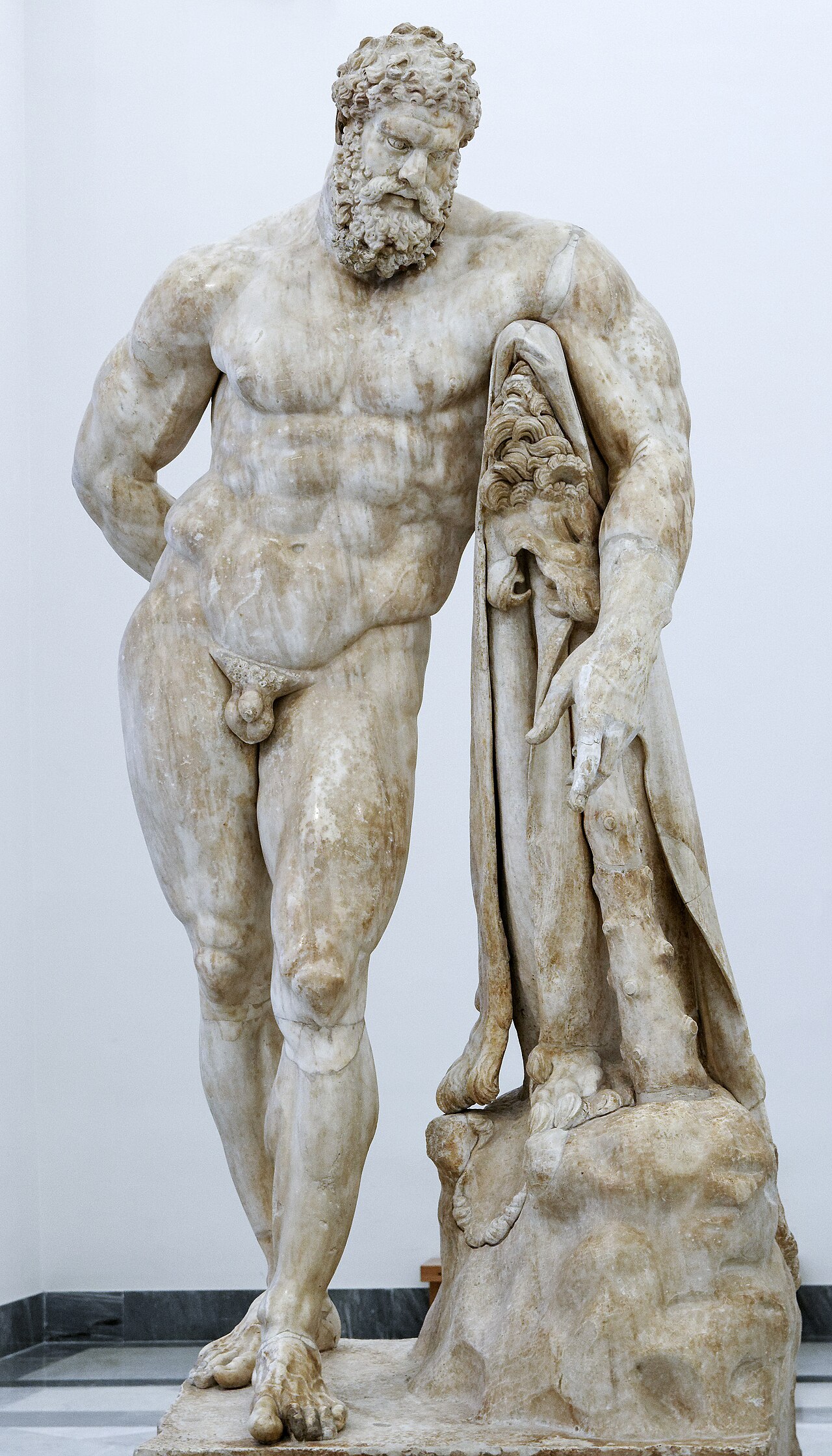
Heracles (Hercules in the Roman tradition) was the son of Zeus and the mortal woman Alcmene, the greatest of all Greek heroes and, eventually, the only mortal to achieve full divinity. From birth, he was marked for an extraordinary destiny. Hera, furious at Zeus's infidelity, sent two serpents to kill the infant Heracles in his cradle; the baby strangled them both with his bare hands. But Hera's hatred followed him throughout his life, culminating in a fit of madness she inflicted on him in which he killed his own wife and children. The Twelve Labors were the penance imposed on him by the Oracle at Delphi: tasks set by his cousin Eurystheus, king of Tiryns, that seemed designed to be impossible.
The Labors proceed from the local to the cosmic in geographical scope. The first six take place in or near the Peloponnese: slaying the Nemean Lion (whose golden hide became his iconic cloak); killing the nine-headed Lernaean Hydra; capturing the Ceryneian Hind; capturing the Erymanthian Boar; cleaning the Augean Stables (which housed thousands of cattle whose dung had accumulated for years; Heracles diverted two rivers to wash it out in a single day); and driving away the Stymphalian Birds. The final six extend across the wider Mediterranean and into the mythological fringes of the world: capturing the Cretan Bull; taming the Mares of Diomedes; obtaining the girdle of the Amazon queen Hippolyta; capturing the Cattle of Geryon from the far western ocean; fetching the golden apples of the Hesperides from the world's edge; and finally descending into the underworld to capture Cerberus, the three-headed guard dog of Hades.
The Labors served as a kind of encyclopedic catalogue of the dangerous creatures and places at the margins of the Greek world. Many of the monsters Heracles killed, including the Hydra, the Nemean Lion, and the Stymphalian Birds, were understood as real threats that archaic civilization had to overcome: dangerous animals, swamps, wilderness. In this reading, Heracles is the civilizing force pushing back the chaos at the edges of the ordered world, making it safe for human habitation. Ancient cities competed to claim that Heracles had passed through their territory, and his Labors were frequently depicted on temple friezes as a visual mythology of civilization's triumph over nature.
Philosophically, the Stoics read the Labors as an allegory of virtue overcoming vice. The early Stoic philosopher Prodicus wrote the famous allegory "The Choice of Heracles," in which the young hero is offered a choice at a crossroads between Pleasure (an easy life) and Virtue (a hard but noble life), and chooses Virtue. This reading transformed Heracles from a muscular brute into a moral exemplar. His final apotheosis, welcomed to Olympus after death, reconciled even with Hera, and married to the goddess Hebe, confirmed his status as the mythological template for the idea that through sufficient suffering and effort, a mortal could transcend mortality itself.