Achilles: Glory, Rage, and the Price of Heroism

Thomas L. Miller
Historian & Writer
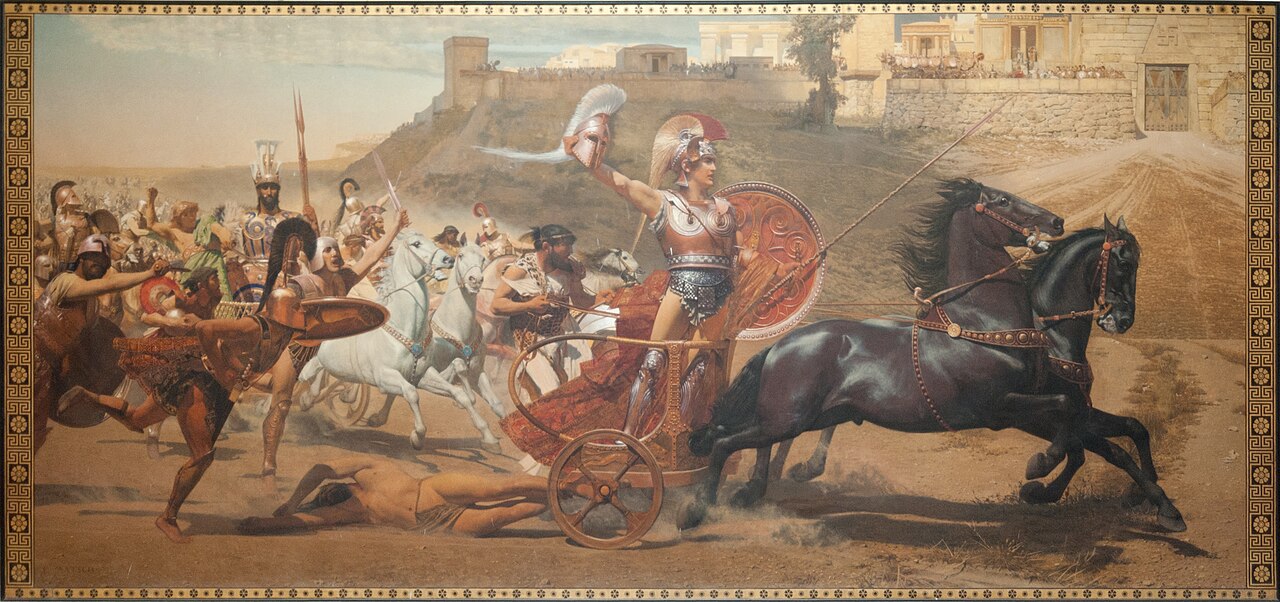
Achilles was the son of the mortal king Peleus and the sea nymph Thetis, making him a demigod of extraordinary power. His mother, knowing he was fated to die young, took extraordinary measures to protect him: one famous tradition holds that she dipped him in the River Styx as an infant, making him invulnerable everywhere except the heel by which she held him, which is the origin of the phrase "Achilles' heel." She also tried to disguise him as a girl among the daughters of King Lycomedes on the island of Skyros, hoping to prevent him from going to Troy. Odysseus saw through the disguise, and Achilles chose the path of war.
In the Iliad, Achilles is both the poem's greatest hero and its most problematic figure. His quarrel with Agamemnon, who takes his captive Briseis as an assertion of authority, reveals the fault line in Greek heroic culture: the system of honor that holds warrior society together is inherently competitive and fragile. When Achilles withdraws from battle in wounded pride, he is not simply sulking. He is making a philosophical statement about the relationship between personal honor and collective obligation. The cost, as the poem brutally demonstrates, falls on others: thousands of Greeks die because Achilles will not fight.
The death of Patroclus, Achilles's closest companion who borrows his armor and dies at Hector's hands, transforms the poem's emotional register entirely. Achilles's grief is overwhelming, almost annihilating. His rage pivots from Agamemnon to Hector with terrifying force. When he finally returns to battle in new armor forged by Hephaestus himself, he is no longer simply a warrior seeking glory. He is grief embodied, a force of destruction that even river gods cannot withstand. His killing of Hector and his treatment of the corpse cross a moral line that even Homer acknowledges, and the poem's climax comes not with a military victory but with a private act of grace: Achilles returning Hector's body to his aged father Priam.
Achilles knew he would die at Troy. Thetis told him so. He is killed, according to post-Homeric tradition, by an arrow from Paris guided by Apollo to his vulnerable heel. But the Iliad itself is less interested in his death than in the choice that made it inevitable: the choice of kleos (glory, fame) over nostos (homecoming). In the underworld of the Odyssey, Achilles tells Odysseus he would rather be a living slave than dead king among the dead, a stunning reversal of his living choice. The ancient Greeks understood Achilles as the embodiment of heroism's splendor and its terrible cost, forever inseparable from each other.