Greek Tragedy: How the Stage Became a Mirror for the Soul

Thomas L. Miller
Historian & Writer
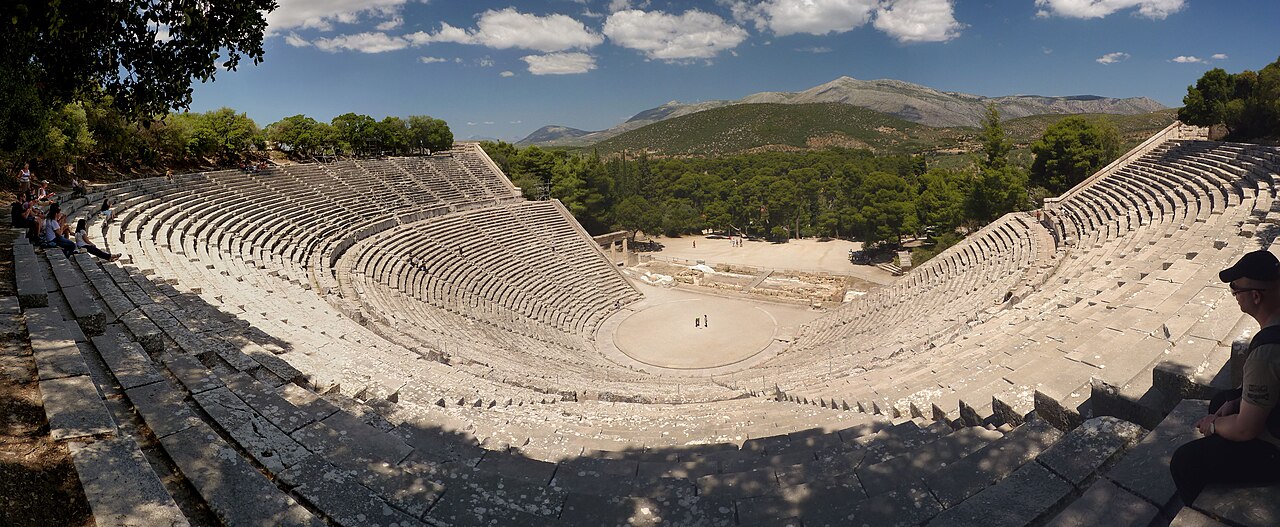
Greek tragedy emerged from the religious festivals of Dionysus, specifically the City Dionysia at Athens, in the late sixth century BCE. The tradition credits Thespis of Icaria as the first playwright to introduce a single actor who could speak dialogue with a chorus (this is why actors are still sometimes called "thespians"). The great tragedians of the fifth century BCE, Aeschylus, Sophocles, and Euripides, elevated the form to extraordinary heights within a single generation. Of the hundreds of plays produced, only thirty-three survive complete, but their influence on Western culture is impossible to measure.
Athenian tragedy was performed at civic and religious festivals in outdoor theaters capable of holding thousands of spectators. The plays were presented in competition, with three tragedians each presenting a trilogy (and an accompanying comedy, a satyr play). Actors wore masks with exaggerated expressions visible from a distance, performed on a circular dancing area (the orchestra) before a stage building (the skene), and were accompanied by a chorus that sang, danced, and commented on the action in verse. Women did not act; all roles were played by two or three male actors who wore different masks to play multiple parts.
The defining characteristic of Greek tragedy is the relationship between human action and cosmic forces, including fate, divine will, and the laws of nature, that exceed human understanding or control. Aeschylus's Oresteia (the only surviving trilogy) traces the inherited curse of the House of Atreus from Agamemnon's murder through Orestes's killing of his mother and his trial before a divine court. Sophocles's Oedipus Rex, which Aristotle considered the perfect tragedy, shows a man who has done everything possible to avoid a terrible fate, only to discover he has fulfilled it without knowing. Euripides was the most psychologically complex of the three, exploring the inner lives of characters with a realism that felt almost shocking to ancient audiences.
Aristotle's analysis of tragedy in the Poetics gave Western literary criticism most of its vocabulary. He defined tragedy as the imitation of a serious action that, through pity and fear, produces a "catharsis" of those emotions, a term scholars still debate, but which suggests some kind of emotional purification or clarification through the experience of watching suffering. The key element of the best tragedies, for Aristotle, was the hamartia, often mistranslated as "fatal flaw" but better understood as a mistake or error of judgment, that leads the protagonist from good fortune to disaster. The audience watches a noble person fall through forces partly of their own making and partly beyond their control, and recognizes something profoundly true about the human condition.