Alexander the Great: The Conqueror Who Spread Greek Civilization

Thomas L. Miller
Historian & Writer
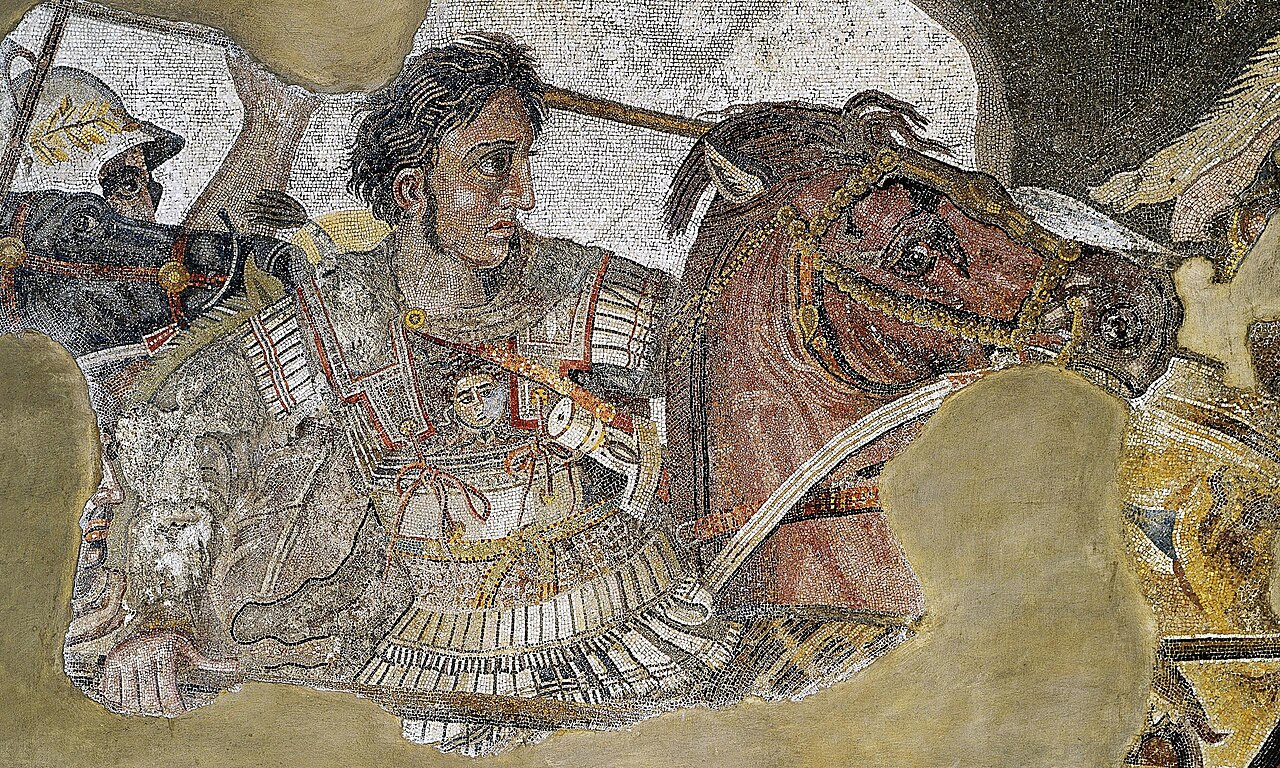
Alexander III of Macedon was born in 356 BCE, the son of Philip II of Macedon and the Epirote princess Olympias. His education was extraordinary: at age thirteen, he was tutored by Aristotle, who instilled in him a passion for philosophy, literature (he reportedly slept with an annotated copy of the Iliad and identified himself with Achilles), and scientific inquiry. At eighteen, he commanded the decisive cavalry charge at the Battle of Chaeronea that crushed the Greek city-states' resistance to Macedonian dominance. At twenty, following his father's assassination, he became king. At twenty-two, he launched his invasion of Persia.
The Persian campaign was initially framed as revenge for the Persian invasions of Greece 150 years earlier, but it grew into something far more ambitious. Alexander destroyed the Persian army in three decisive battles: the Granicus River (334 BCE), Issus (333 BCE), and Gaugamela (331 BCE). The Persian king Darius III fled both times and was eventually killed by his own satraps. Alexander pressed on into Central Asia, founding cities, most named Alexandria, at strategic points across what are now Afghanistan and Pakistan. He crossed the Hindu Kush, reached the Indus River valley, and defeated the Indian king Porus at the Battle of the Hydaspes (326 BCE). His army, exhausted and longing for home, finally refused to march further east, and Alexander reluctantly turned back.
He died in Babylon in 323 BCE at the age of thirty-two, after a fever that historians still debate; some suspect poisoning, others illness. He left no clear successor, and his generals immediately began fighting over his empire in the Wars of the Diadochi ("Successors"). His empire was eventually divided into several Hellenistic kingdoms: the Ptolemaic kingdom in Egypt, the Seleucid empire in Persia and the Near East, and the Antigonid kingdom in Macedon and Greece. These kingdoms lasted until the Roman conquest brought them one by one under Roman rule.
Alexander's lasting significance lies not in his conquests but in their cultural consequence: the spread of Greek language, art, philosophy, and political institutions across the ancient Near East and Central Asia, a process scholars call Hellenization. The koine Greek that became the lingua franca of the Hellenistic world was the language in which the New Testament was written. The libraries of Alexandria and Pergamon preserved and transmitted the Greek intellectual tradition. Hellenistic art, fusing Greek forms with Eastern subjects and aesthetics, produced some of the ancient world's most vibrant and innovative works. In the most profound sense, Alexander's empire created the cultural substrate from which both Christianity and modern Western civilization would grow.